|
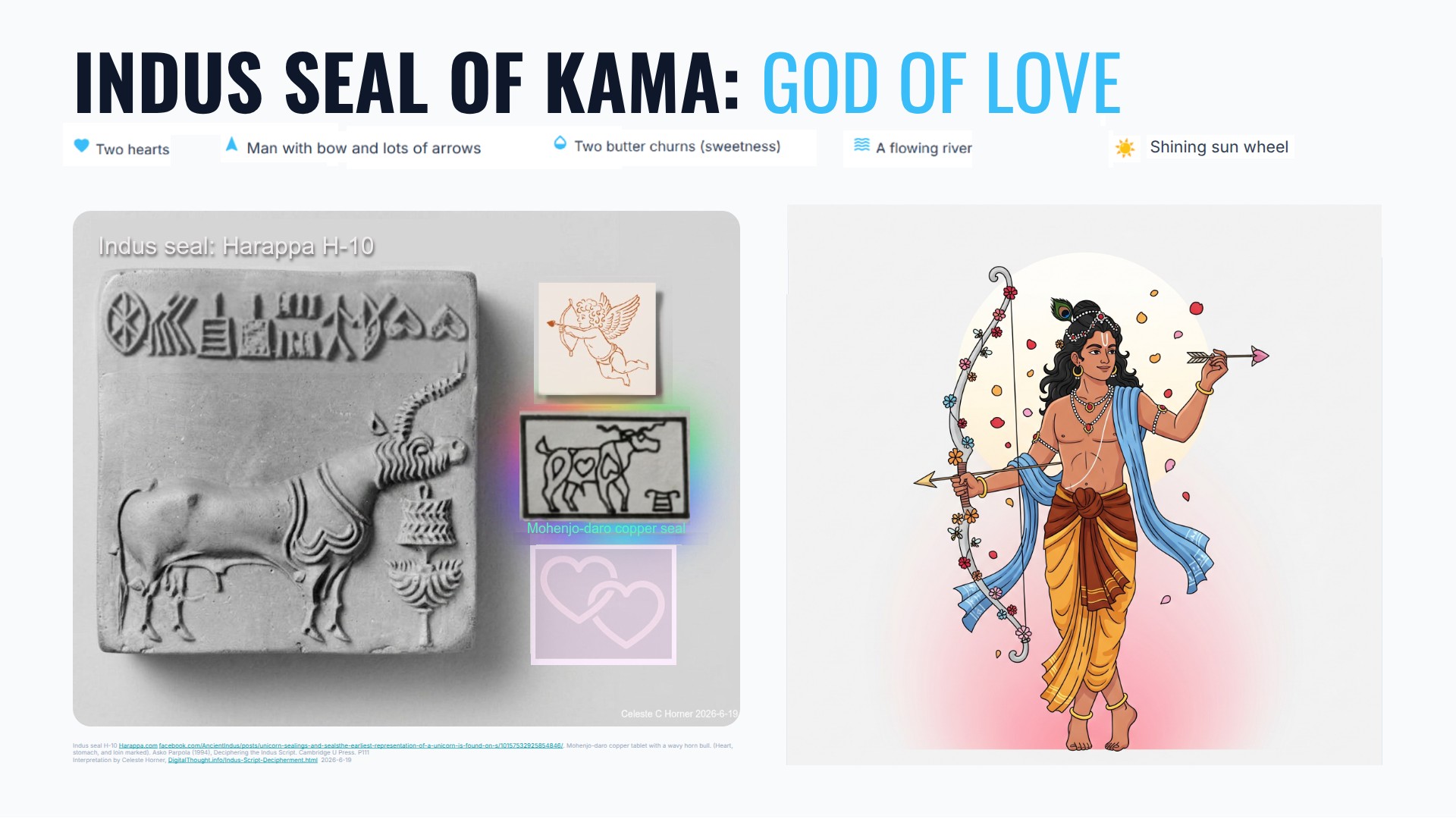
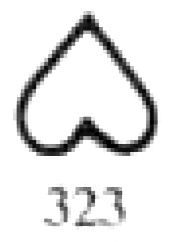
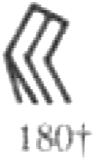
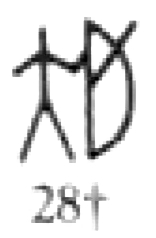
Kama Indus glyph #28 Mahadevan 1977 concordance
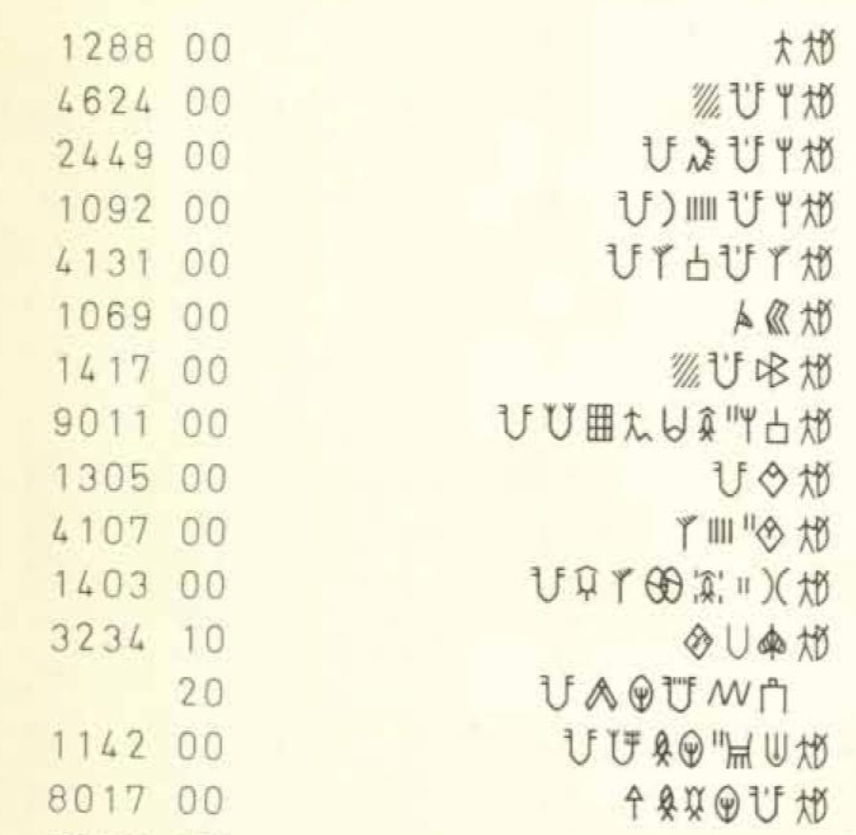
| Inscription 1288: Kama (Love) |
 |
 |
Ka
Kama |
Ma
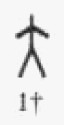
Manu (first man),
Muni (ascetic)
Am (person) |
There should probably be seals for Dharma, Artha, Kama, Moksha 2026-8-5.
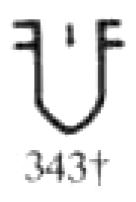
1069: Kama vasa, controlled by passion
2449: Shiva, Kama, Sati (reincarnated as Parvati)
4624: KSHATRIYA, warrior #28 also?
| Inscription 2449: Death of Kama |
|
 |
 |
 |
 |
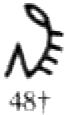
| Kama |
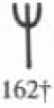
Shiva's trident weapon
Trishul, Shiva, destroy |
Shiva alone |
Skeleton / Corpse
Sati Parvati
Kama death |
Shiva
empty |
3234: Kalpa Vriksha: wish-fulfilling tree?
Kāma (काम): Sanskrit for desire, longing, pleasure, or love. It is one of the four proper goals of life (puruṣārtha) in Hindu philosophy. [1, 2, 3]
Kāmavaśa (कामवश): A compound of kāma (desire) and vaśa (under the control of, sway, or power), describing someone swayed, blinded, or controlled by physical or emotional passion. [1, 2, 3, 4, 5, 6]
Verb Root: Derived from kam (to love, wish, or desire)
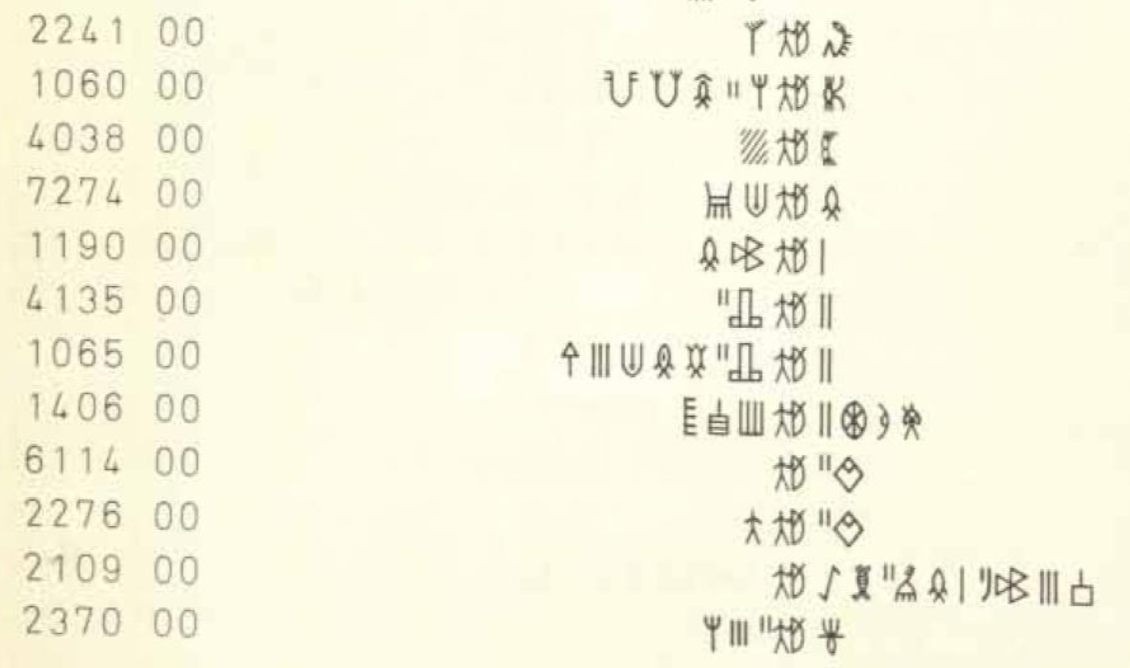
2241: SA-KA-RA. Sati - Kama - Ra
Saqqara, Egypt? Sa (know) Kar (heart) Ra (light)
In Sanskrit, the term sākāra (साकार) means "having form," "figured," or "manifested with a definite shape" (combining sa-, meaning "with," and ākāra, meaning "form" or "shape"). It is often used in Hindu philosophy to describe the personal concept of God (Sākārarupa or worship of a deity with a specific form), as opposed to Nirākāra (formless). [1, 2, 3, 4]
|