|
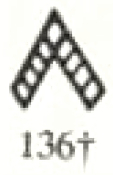
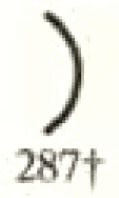
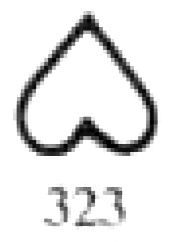
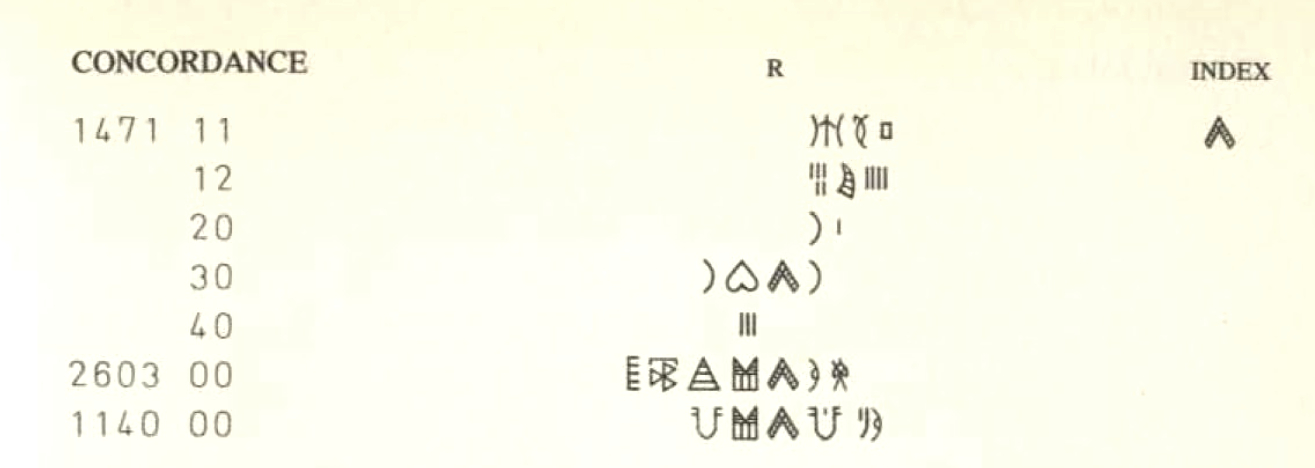
Glyph 136: Mahadevan 1977 concordance entries
[1] Mount Kailash, with diamond-gem (consciousness) at the top
[2] Mount Kailash, abode of Shiva and Parvati
[3]
[4] Parama (परम) is a Sanskrit superlative adjective that means "supreme," "highest," "ultimate," or "the best"
[5] Superlative Suffix: The suffix -ma turns it into a superlative form, meaning "the most distant" or "the absolute highest" point
[6] union
[7]
[8]
[9] Related glyphs: #135, #136
Mount Meru
Parama Vishnu Lokha - Ankhor Wat
 |
 |
 |
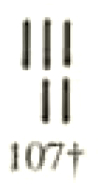
Five
peaks
of Mount Meru |
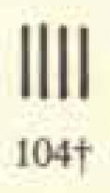
Horn
Mount Mandara
mountain peak
central peak uprooted from Mount Meru
for Ocean churn |
Four
remaining peaks of Mount Meru
|
Inscription 1471.12:
Sacrifice, prior to the churning of the Ocean of Milk. Mount Mandara peak, steep and sharp like a horn i
was broken off Mount Meru. It was carried by Vishnu's eagle mount Garuda
to the ocean. Formerly, Meru had 5 peaks, after this sacrifice was reduced to 4.
Brahma's 5 heads reduced to 4. Dharma originally 4 legs, one reduced each Yuga until only one leg
in Kali Yuga.
Sacrifice prior to churning. Linga uprooted theme.
5 peaks of mountain reduced to 4 peaks, the 4 pillars of the world, holding up the sky
Inscription 2603:
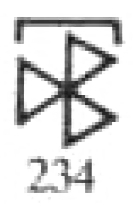
Kur ((core, heart)) Underworld, Sumerian 𒆳 ) Hidden realm
U+121B3 𒆳
[INDUS SCRIPT HOME] | [ INTERPRETATION TABLE ]
DRAFT UPDATED 2026-9-27, 2026-9-25 celeste@digitalthought.info / celeste.horner@gmail.com
|