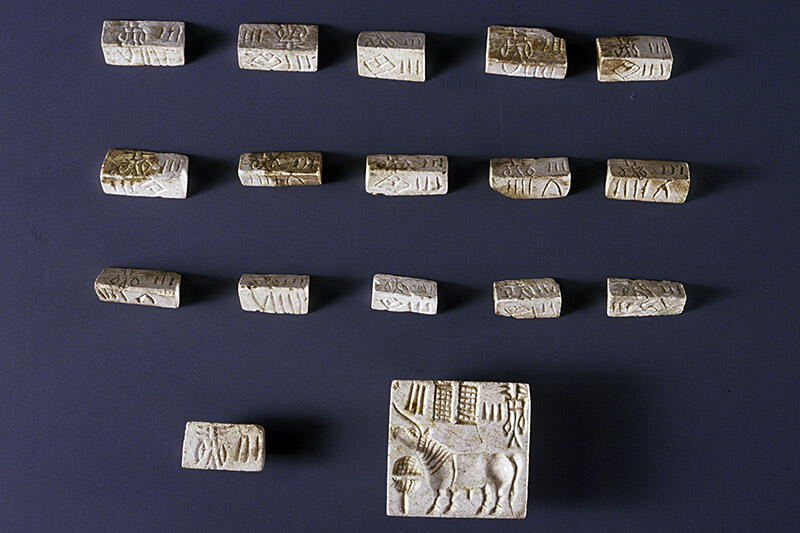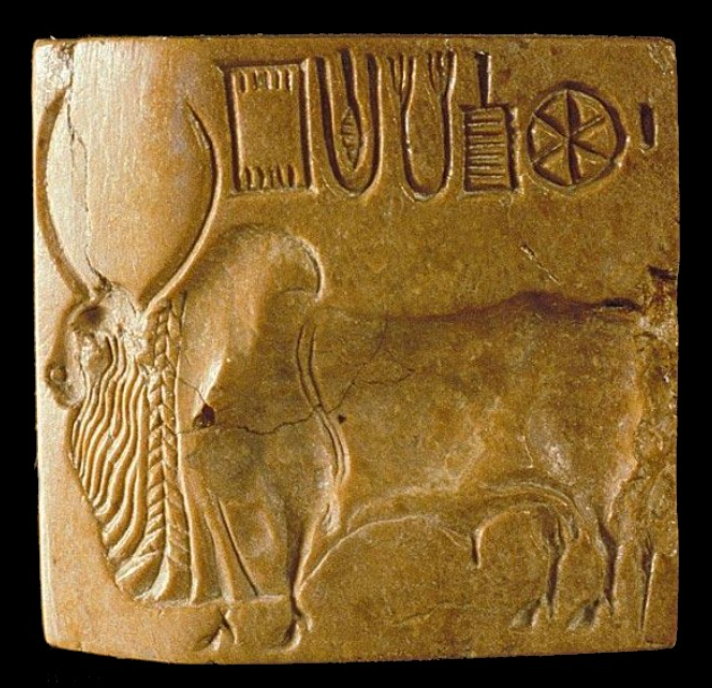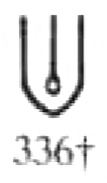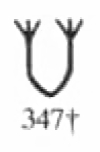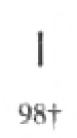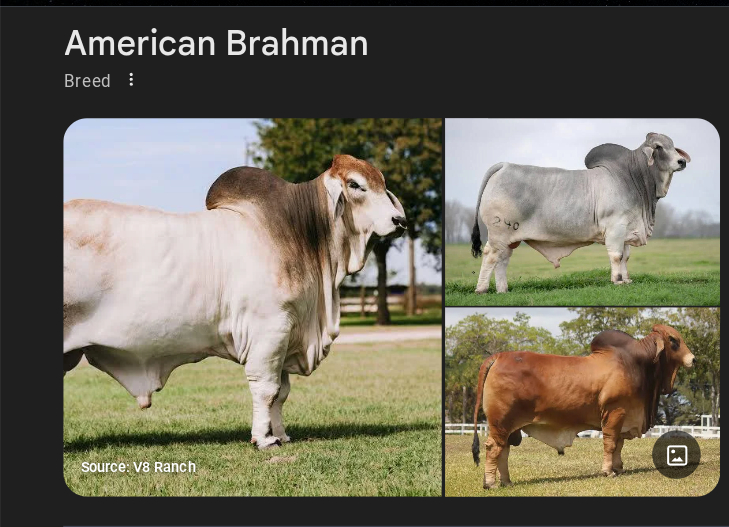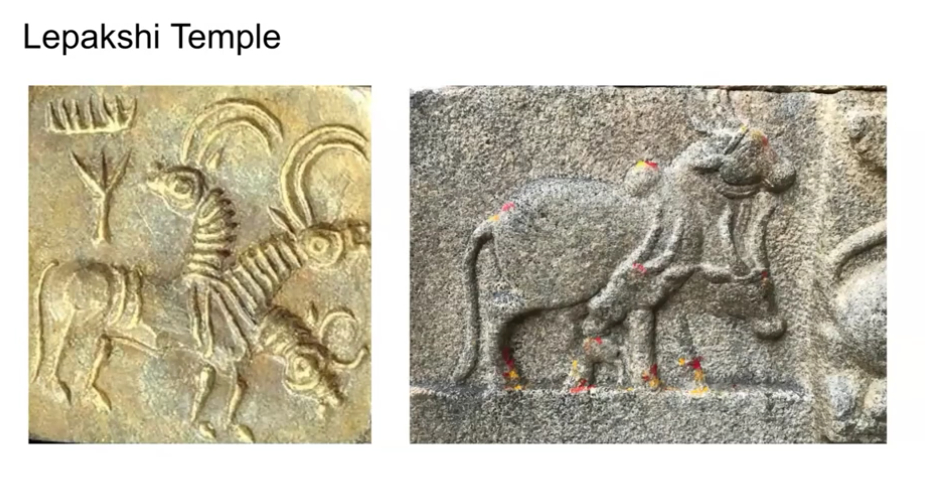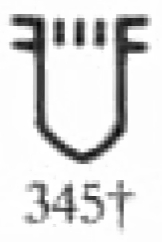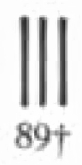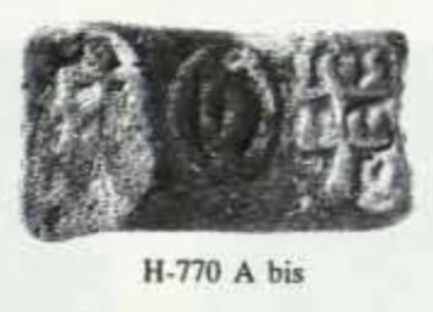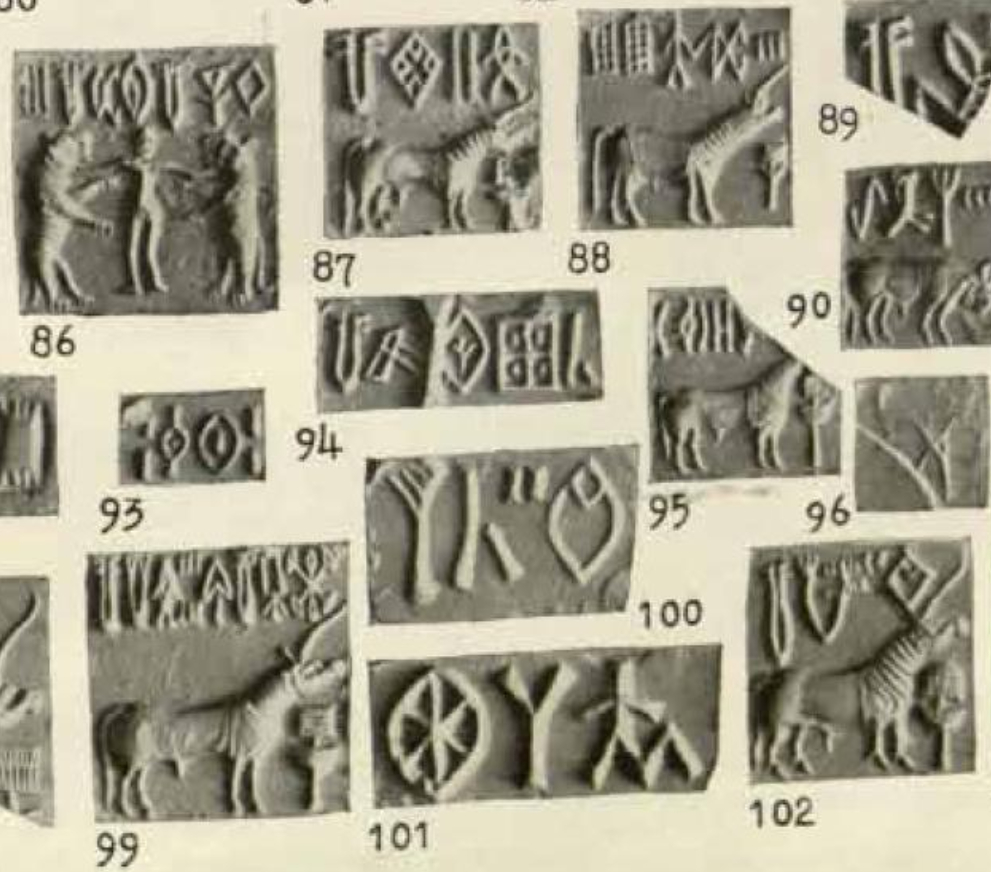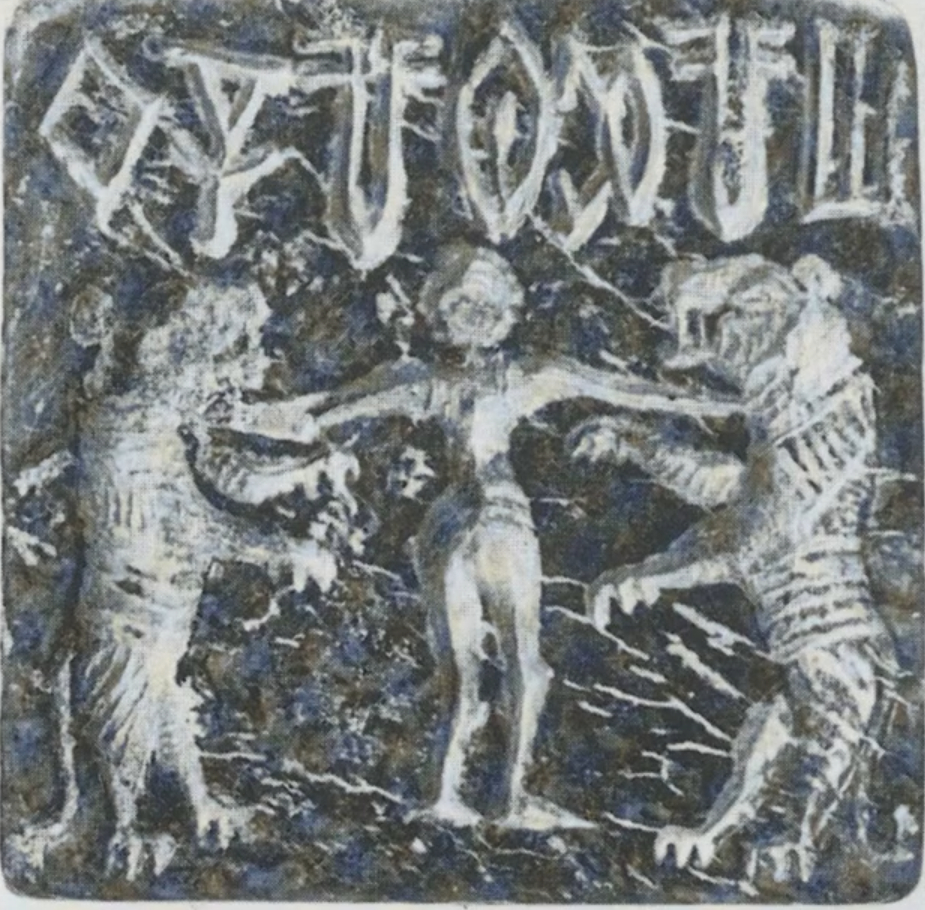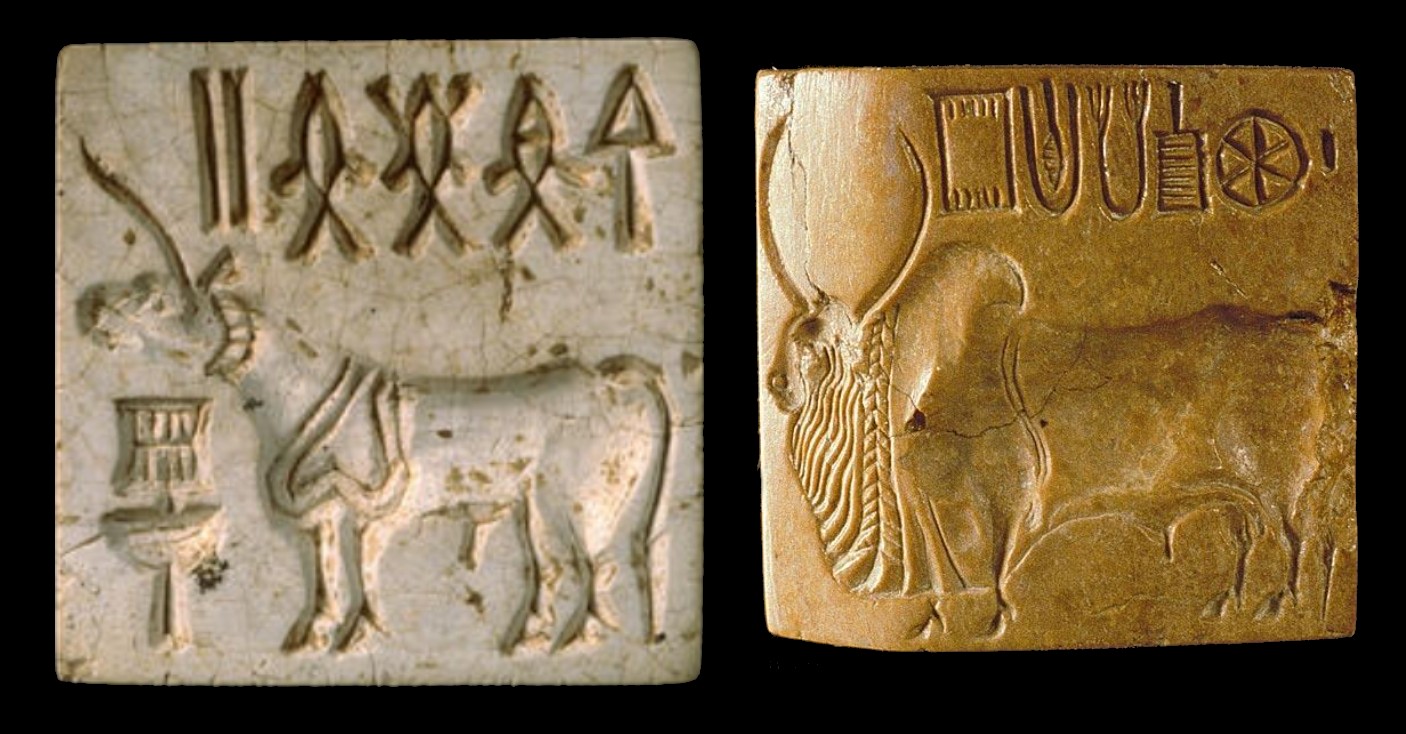
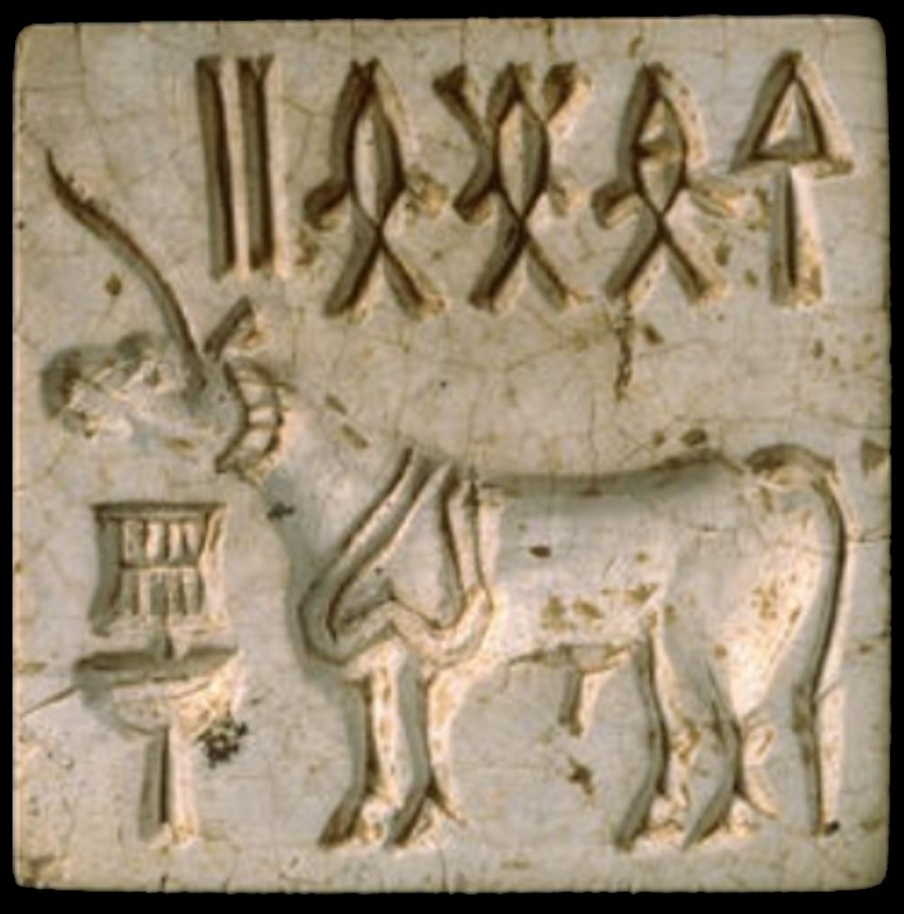
| Indus script seals from Harappa and Mohenjo-daro, c 2500 B.C. Both express the theme of unity Left: Unicorn seal. Translation: "ADVAITA" (UNITY, UNDIVIDED). Right: zebu bull seal. Translation: "BRAHMAN". Brahman bull represents god Brahman, the transcendent union of all gods. |
ADVAITA - without division
 |
\ |  |
 |
 |
 |
 |
 |
 |
| A "A" POINT zero negated none void |
A"a" slash zero negated none void divided, separated from |
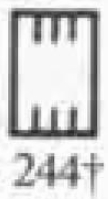
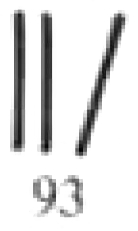
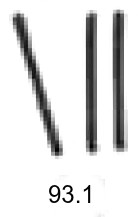
ADVAITA NON-DUAL United \ "a" without apart divide || two, division division of a division, repeated segment of verse |
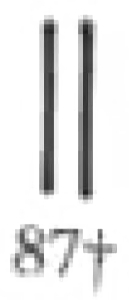
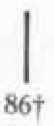
DVE DUAL, 2 द्वे dve Jyotirlinga pillar of light |
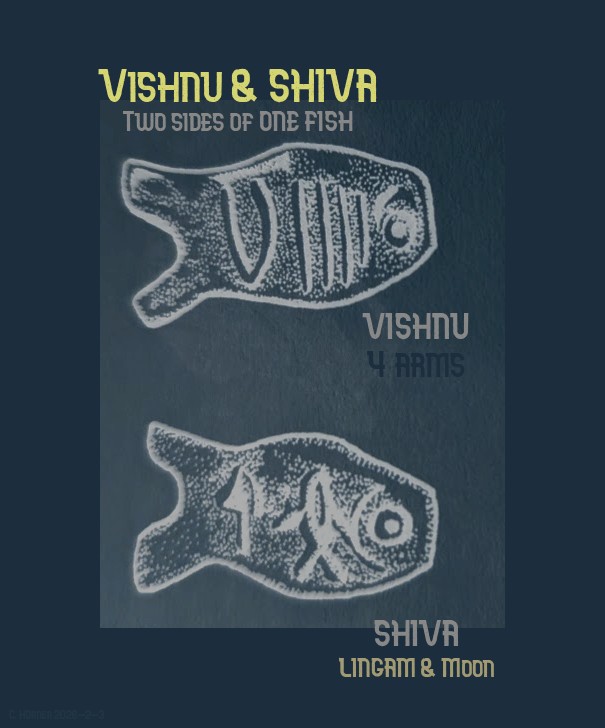
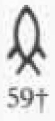
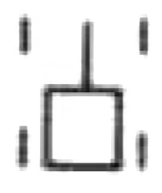
DEVAGOD SHIVA Shiva nirguna no qualities, blank god fish Brahma, Vishnu |
DEVA GOD VISHNU 4-arm god divine form |
DEVA GOD SHIVA 3rd eye Brahma, horizontal crack, hatched golden egg |
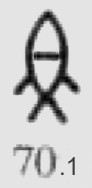
DEVA GOD BRAHMA hatched golden egg horizontal egg crack, top sky, bottom earth This glyph is not an official entry in Mahadevan (1977) catalog. Variation of #70 Shiva 3rd eye fish, which has a vertical pupil, whereas Brahma's fish has horizontal midline. It is used multiple time in corpus. Added by C. Horner 2026, #70.1 |
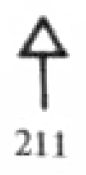
TAUp (Sanskrit ut-) Ut- (उत्) chatra divine parasol Sumerian "ti" arrow, life. Chinese: 天 (Tiān, "Heaven @at up ad to great Maha haute, high dedicated to O Great! |
|
The unicorn seal
THE UNICORN SEAL was discovered 1997. It was found at Harappa on Mound F in trench Trench 49E, in the remains of a "grainary" structure with twelve halls. No grain has been found there. Twelve halls may represent a calendar of 12 months. The unicorn seal is dated to approximately 2200 B.C. (Harappa.com).
|
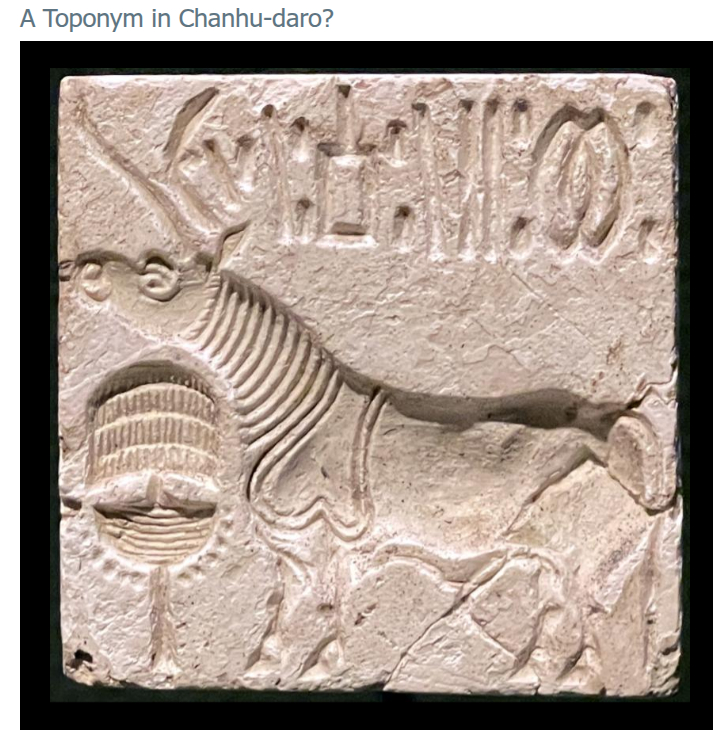
Image credit: Harappa.com
A toponym of Chanhudaro?
No \. King (* Raja (Bonta). Lord \/. People amu -[]. United (()) undivided.
Not Vedic, which requires king to please the gods per Puranas.
ADI AM (First People) ADVAITAM - United People, without division
| \ |  |
 |
 |
 |
 |
 |
A"a" slash zero negated none void divided, separated from |
D crescent moon bulging, holding dawning sun |
I ii, y, AND, UNION '/ v va divided, parted ti " dual (ta) Pati (पति) lord steps |
A one, 1 "M" |
M Manthan, Churning Day, MahaShivratri, head, mind, no ego, head off, humble, mace, Vishnu |
ADVAITA NON-DUAL United \ "a" without apart divide || two, division division of a division, repeated segment of verse |
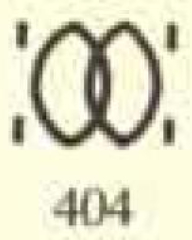
TAM =~ DAMARU, DEM (people) Advaita. ITA. Union Day Nakshastra. Vesica piscis, intersection of circles. Yoga (union). Complete, together TAM. Merge, Marriage Day. DAM Damaru, Creation Day Genesis: And he called their name ADAM. (Genesis 5:2) |
|
ADI AMU ADVAITHAM.
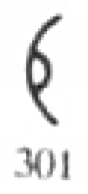
Variation: not #99 = ". #124 is \' MN. | = M, ' = n. MANU - first man. MANTHAN = churning. Phonetic complement. '| nama bow. Phonetic complement ADI aMnaM AMM(w) AMU. First Ones. Gensis 5:2: Male and female, he called their name Adam in the day in which they were created. Adi am Advaitham (First People, Undivided), Interpreted by Celeste Horner 2026-7-12 2026-9-26: People of the First Lord, undivided. Adi (first). Pada: word, foot, pillar, unit length, residence. Pata (Fallen) Pada. Pati lord. v36: Brahma said - Shiva is lord of individual souls. Reduced Kama to ashes. Siva Purana ch13, WisdomLib |

Priest King, Non-king. Sage Atri, mind-born son of Brahma, author of Rig Veda book 5
Honors Trimurti, who were born as his three sons
The name Atri is encoded in his robe:
O = A. Trefoil = three = "TRI"
CCH 2026-7-14
At (high, zero, no, focus, towards)
Re (king, light).
There is a tiny dot in each circle. Focus.
Egalitarian ring governs both thought (forehead)
and action (arm, bicep, strength)
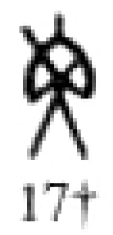
Bonta: Ati.
ATI = Female Ultimate. SHAKTI. ATMA and ATRI. AT (ultimate, high, zero) TREE. Tree of Life. Banyan air root from heaven leaf survives Pralaya flood ATMA Big Mama. Atri's wife Anasuya was so chaste she changed Brahma, Shiva, and Vishnu into babies.
Post churning Shiva swallowed poison, unborn reduced to baby, nursed by mother goddess Tara. Her milk is Soma. Completing his existence cycle. Poison was medicine.
Chief god caring for all receives mother's care. Mother goddess is fierce protector, thus large breasts and swords that defeat demons none other can beat due to boons.
Bonta: Deva ati deva su deva.
CCH: God above all gods and behind all gods.
GOD IS ONEOther Indus artifacts creatively illustrate in three dimensions how God can have multiple aspects, yet still be one, Advaita. Three-sided prism amulets illustrate the three faces of Trimurti, yet unity of god. The side with four tally marks represents Vishnu, a god with a four-arm manifestation. The prism face with three tally marks symbolizes the god Shiva with three eyes. The water-bearer symbol represents Shiva's cosmic balance and axis role and his labor of bearing the oceanic force of the waters of Ganga falling from heaven, and swallowing poison from the Ocean of Milk in order for others to receive Amrita. (The unicorn tablet refers to the Curse of the Kumaras legend).
| ||||||||||||||||||||||||||||||||||||||||||||||||||||||||||||